
Is Antivirus Enough for a Small Business?
Antivirus is a start. What matters next is who is watching, how your accounts and people are protected, and what happens when an alert needs a response.
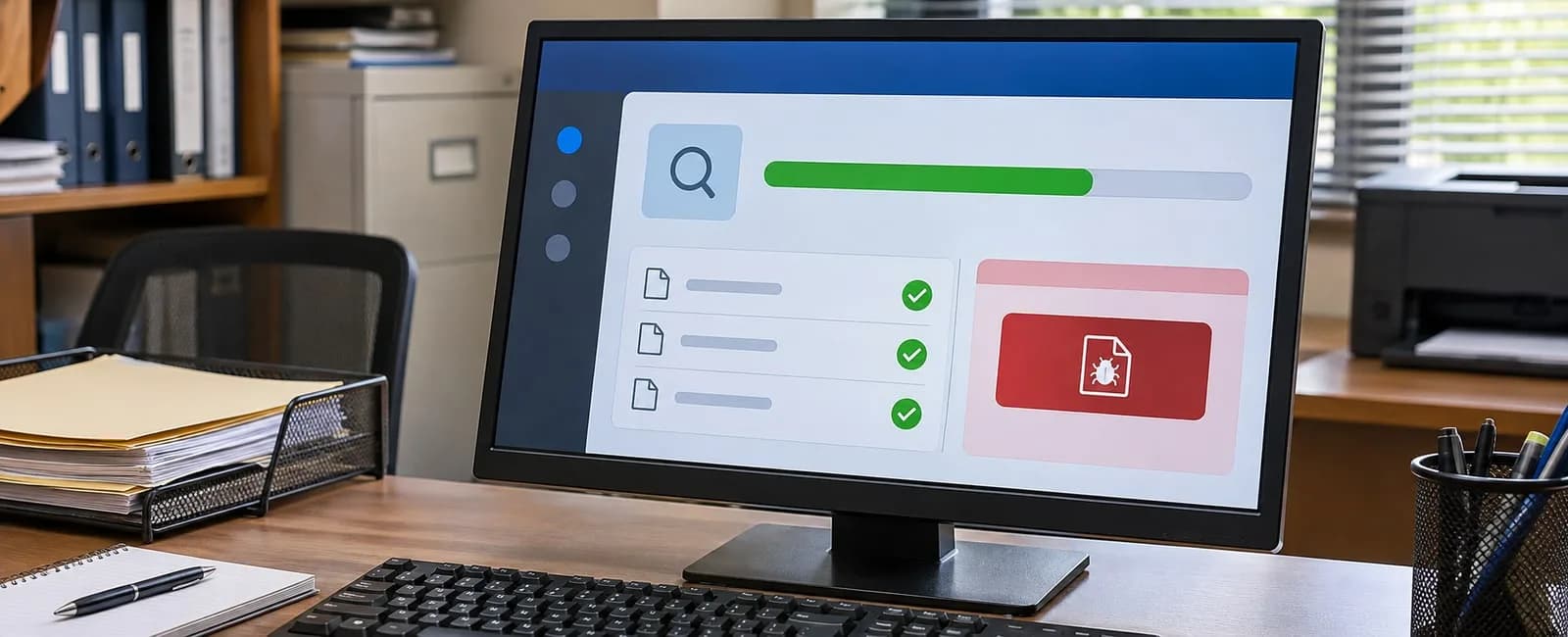
No. Antivirus is worth having, but it is not a complete security plan for a business. The question I would ask next is: when something suspicious happens, who notices, who investigates, and who does something about it?
That is where the conversation gets more useful. A green check mark on a laptop does not tell you whether someone is watching the alerts, whether your Microsoft 365 accounts are protected, or whether your employees know what to do with a convincing fake invoice.
At Quantum, we look at the whole business: the computers, the accounts, the email, the people and the recovery plan. Antivirus has a place in that. It cannot do all of those jobs.
A security alert needs someone on the other end
We use antivirus alongside endpoint detection and response, usually called EDR. Antivirus helps stop malicious software. EDR adds visibility into suspicious activity on the computers and servers your business relies on, so an incident can be investigated and a compromised device isolated when appropriate.
But installing EDR and leaving the alerts unread would miss the point.
Quantum's security stack includes a 24/7 security operations center, or SOC, for monitoring, analysis and response. Our monitoring partner extends that coverage, and Quantum handles the client follow-through. The people investigating a threat and the team that understands your business need to be working together.
Think about an accounting computer behaving strangely after everyone has gone home. You want more than an email waiting in somebody's inbox the next morning. You want suspicious activity reviewed, the response coordinated and a clear explanation of what happened. That is the job these layers are there to support.
Your business is bigger than its computers
A stolen Microsoft 365 account can cause trouble without a traditional virus ever appearing. So can a fake payment request that looks like it came from a supplier your team knows.
That is why our stack also includes email threat protection, cloud and SaaS account monitoring, Microsoft 365 security hardening and multi-factor authentication. Dark-web monitoring adds another signal when credentials have been exposed.
Each has a different job. Email filtering helps keep malicious messages out. Account monitoring looks for suspicious activity after a sign-in. Access controls help limit who can reach what. None makes the others unnecessary.
The human firewall is part of the package
Telling employees to "be careful" is easy. Giving them a useful way to recognize a problem takes more work.
A person in accounting may know the supplier's name and recognize the invoice format. What needs a second look is the unexpected change of bank details. A busy employee may be expecting a shared document. What needs a second look is the sign-in page it sends them to.
Quantum's security services include ongoing security awareness training and phishing simulations. That is how we build the human firewall: helping your team recognize those moments, verify what they are being asked to do and report something suspicious quickly.
The point is not to catch people making mistakes. It is to give them practice and make it easy to ask for help. If someone has already clicked, we want to hear about it. Silence gives a problem more time.
Someone has to keep the whole stack working
Security tools need attention too. Devices change. Employees join and leave. Applications need updates. A backup job can report success without anyone checking that the business can actually restore what it needs.
Quantum uses remote monitoring and management, including Kaseya 365, with managed operating-system and third-party patching. Our services also include email backup, and our managed IT offering includes tested restores and documented recovery steps.
This is the less dramatic work behind business security. Keeping coverage current, closing old access and checking recovery matters just as much as responding to a threat.
What you should expect from Quantum
You should not have to assemble a pile of security products and become the person responsible for making them work together. That is what a managed security relationship is supposed to solve.
When we review your protection, the conversation should cover the whole package:
- AV and EDR on the devices that need protection, with people investigating the alerts.
- 24/7 SOC coverage, plus a clear plan for Quantum's follow-through.
- Email, cloud-account and sign-in protection.
- A human firewall built through training and phishing simulations.
- Managed updates, backups and a recovery plan that has been checked.
Your service agreement should make the coverage and responsibilities clear. If all you know about your current protection is the name of the antivirus, let's have a better conversation. We can walk through what is covered, who is watching and where your business still has gaps.