
The Hidden Cost of "Cheap" IT, and How to Read a Quote
When one IT quote is half the price of another, something is usually missing. How cheap quotes stay cheap, where the money goes later, and six questions that show the real price.
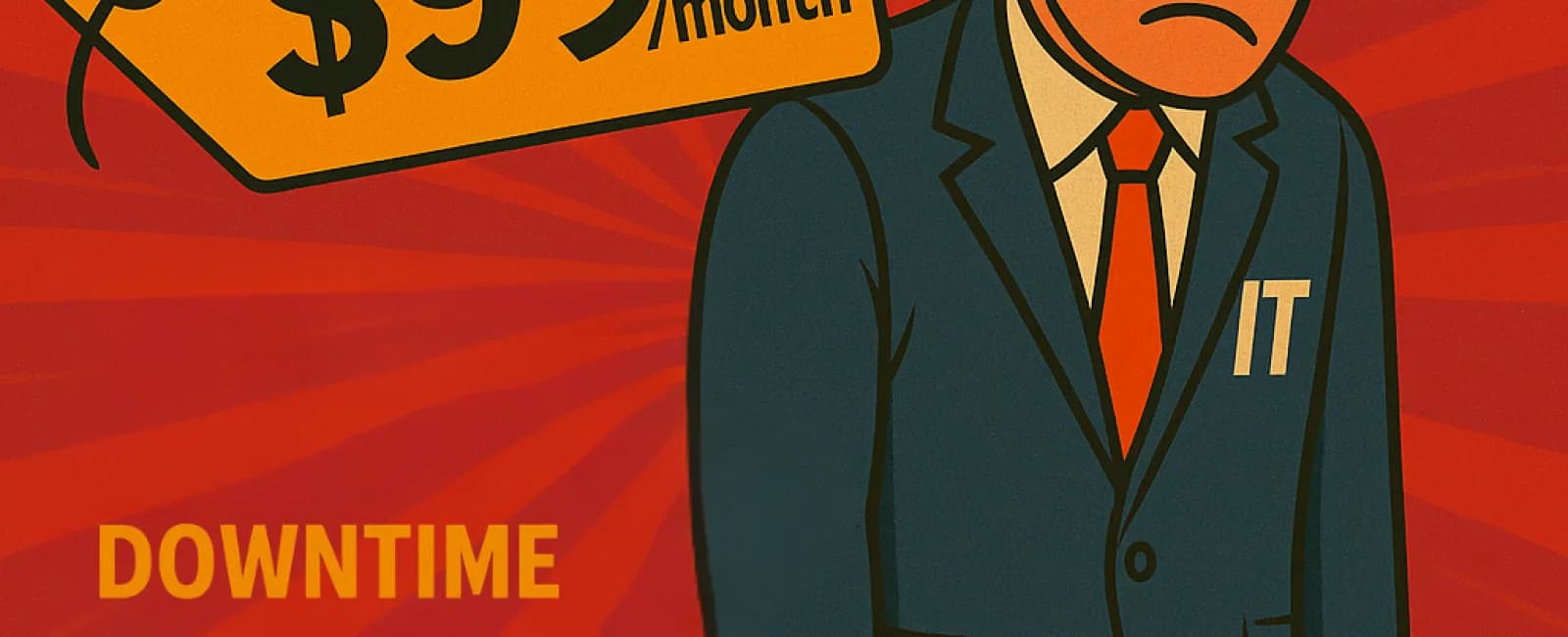
I've been on both sides of this conversation since we started Quantum in 2013. Two IT quotes land on your desk. One is half the price of the other. It's tempting to assume the expensive one is padded. Usually the cheaper one is missing something, and you find out what when it matters.
How a cheap quote stays cheap
Most low quotes use one of three tricks.
- Monitoring only, hourly for everything else. A small monthly fee covers watching your systems; fixing anything is billed by the hour. The quote looks low, and a bad month costs more than a year of proper coverage.
- Security left out. Endpoint detection, email filtering, multi-factor sign-in, and someone actually watching the alerts are the expensive parts. A thin quote either leaves them out or includes a basic antivirus and calls it security.
- Backups nobody tests. "Backups included" can mean a copy that has never been restored. You learn whether it works on the worst day of the year.
Where the money goes later
The savings disappear in places that don't show up in the quote:
- Hourly bills for problems a proactive provider would have prevented.
- Staff time lost to slow computers, recurring issues and waiting for callbacks.
- New hires who sit for a day because nobody set up their accounts, and former staff who keep access because nobody turned it off.
- A cyber insurance application you can't honestly answer "yes" on.
- The cost of a breach, which for a small business is mostly downtime and recovery, not the ransom.
There's also the incentive problem. A provider paid by the hour earns more when things break. A provider paid a flat monthly fee earns more when things don't. That one difference shapes how they treat your systems. That's the reason we've always worked on a flat monthly fee.
What complete managed IT includes
In Northeast Wisconsin, a complete managed IT plan typically runs $100 to $200 per user per month. Below that range, something on this list is usually missing:
- Help desk support with no hourly meter, including after hours when you need it.
- Monitoring and patching of every computer and server.
- A security stack: endpoint detection and response, email protection, multi-factor sign-in, and someone watching it.
- Backups that are tested on a schedule, with a copy ransomware can't reach.
- Onboarding and offboarding handled the same day.
- Documentation of your systems that you own.
- A regular planning conversation about budget, risk and what's coming next.
Six questions that expose a thin quote
- What's included, and what's billed by the hour?
- Is endpoint detection and response included, and who watches the alerts?
- When did you last test-restore a client's backup, and how long did it take?
- What happens to my monthly price when we hire or lose people?
- Who handles after-hours problems, and is that extra?
- If we part ways, do we keep the documentation and the admin passwords?
If you'd like a sense of where a fair price lands for your team, our managed IT price estimator gives a typical range in seconds, no email needed. If you have a quote in hand right now, send it over. I'll tell you honestly what's in it and what isn't, even if we're not the right fit.
Not sure where your business stands on this?
We’ll walk through how you handle it today and tell you straight whether it needs attention.